.avif)

Blog
What 1,000+ Fintech Builders Are Teaching Us
Fintech builders are getting smarter faster than the market is giving them credit for. Building in fintech has always been challenging for new entrants, especially while working through bank account linking and data enrichment options. Some are funded and scaling, but many are just bootstrapping a side project that they’re trying to ship.
We work with a lot of early-stage fintech teams. That vantage point gives us a unique opportunity for pattern recognition from the same five questions coming up over and over, often earlier in a founder's timeline.
The patterns we’re seeing say something about where fintech is headed that's easy to miss from inside a single company's roadmap. Here are five that stand out right now.
- Redundancy Used to Be a Scaling Problem. Now It's a Starting Assumption.
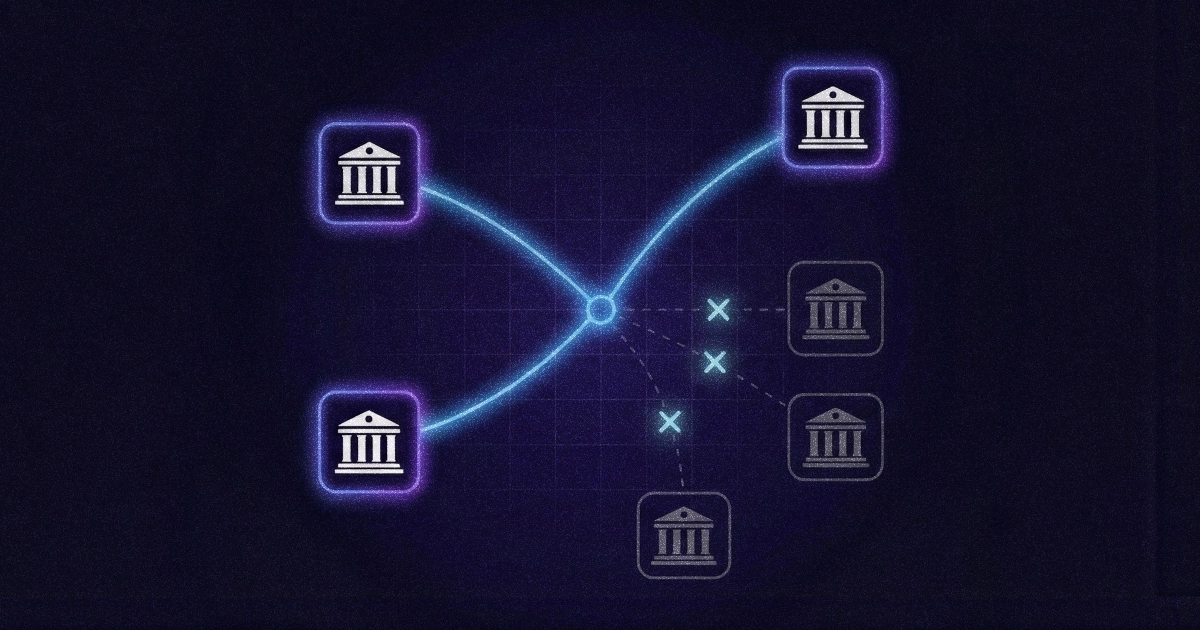
Teams look to Quiltt for robust routing between aggregators, so a single outage doesn't take down their product. A year ago, a team asking about this multi-provider failover was usually searching for a resolution to some painful outage. They'd lived through a technical failure or a pricing change that broke their unit economics.
Now we see that same question from teams who haven't shipped anything yet.
They've watched it happen to other companies. Public outages and surprise pricing changes hit the news along with founder Slack groups. The lesson used to be learned firsthand, with a lot of personal pain. Teams don’t need to feel that pain themselves; they’re building in redundancy before they have a single user to protect, because they've seen enough people learn the hard way that they don't want to.
This is a market maturing faster than any individual company's experience curve would predict.
- Founders Are Pricing Out Unit Economics Before They Have a Product
Per-user flat-fee pricing is the kind of thing that used to come up during renewal negotiations. The original contract terms designed for lower volumes stop making sense after growth. That conversation happened after traction.
We're now seeing pre-launch founders ask this question, even at the idea stage. Before they've shipped, they want to know: what does this cost at 1,000 users? At 10,000? What's the model at scale, not just at pilot volume?
That's a meaningful shift in when financial discipline enters the founder's process. It used to be a reaction to growth. Now, it's a precondition for starting. Whether that's a function of more founders having some operating or finance background, or just better information available, the effect is builders who model the unit economics before they build.
- Vendor and Data Lock-in Is a Pre-Purchase Question Now, Not a Renewal-Time Fight
Vendor lock-in used to be something teams discovered the hard way. A company would want to switch providers, realize the migration was more painful than expected, and only then start asking hard questions about data portability and ownership.
Early-stage teams ask about data ownership and portability before they've signed anything. Somebody's bad migration experience has become common due diligence for people who haven't picked a vendor yet.
This tracks with a broader trend: technical decisions that used to be made reactively, in response to a specific event, are increasingly made proactively. The fintech founder community talks, and their lessons propagate fast.
- There's a Real Gap in B2B and Commercial Data Coverage
Most bank account aggregation, across the industry, is built and optimized for consumer checking and savings accounts. That's where the volume is, and that's where solutions have matured.
Teams building anything that touches investment platforms, retirement accounts, or commercial and treasury portals keep running into a coverage gap. And critically, they're not finding it by searching for it. They're finding it mid-build, after they've already committed to a product direction, when the aggregation layer they assumed would work simply doesn't cover the accounts their users actually have.
Nobody set out looking for whitespace in commercial and investment account connectivity. They stumbled into it because the existing tools were built for a narrower slice of the market than their product needed. That's usually a reliable signal. When founders keep getting surprised by the same gap, independently, without coordinating with each other, that's often where the next category of infrastructure gets built.
There’s a structural reason that gap exists. Aggregator coverage has always followed volume: consumer checking and savings drove the most connections, so that's where prioritization, OAuth investment, and reliability improvements accumulated. Business banking trailed by default, not by design. As Quiltt founder Ruben Izmailyan discussed on the Headless Banking podcast, the downstream effect is an economic paradox: B2B customers are often willing to pay far more for a working bank connection than consumer apps ever will, because a missing feed means broken reconciliation or decisions made from stale balances, not just a budgeting app that's less useful. Yet the coverage available to them is thinner, and business bank connectivity still runs largely on screen scraping rather than the API-based flows that now power most consumer integrations. The gap wasn't intentional, but rather the outcome of a volume-first model applied to a market where value per connection, not connection count, is what actually matters.
- More Early-Stage, Not-Quite-Ready Projects Than We Used to See
We don't have a single clean explanation, and we're suspicious of anyone who claims they do.
For one, AI-assisted development tools have lowered the cost of starting any software project. Scaffolding an MVP that touches bank data used to require more specialized setup. That likely means more people are starting builds and getting further into them before deciding whether the idea holds up, which shows up on our end as more early-stage, pre-launch activity.
Open banking infrastructure has also gotten more legible over the last few years. Aggregators have absorbed a lot of the underlying complexity, which means a non-technical or lightly technical founder can scope a fintech idea further than they used to before running into the parts that require real expertise. That could mean more people getting deep enough into a build to talk to a provider like us, without necessarily having the full picture of what shipping actually requires.
It's also possible this is a cohort effect. A particularly active quarter, rather than a durable trend. We'd rather flag that possibility than present a single loud data point as a market-wide shift.
Fintech has leveled up
Taken together, these patterns point to a fintech builder population that's more sophisticated, earlier in its process, than the cohort we were talking to even eighteen months ago. Questions that used to come from Series A companies about redundancy, unit economics, data portability, and coverage depth are now coming from teams before they've launched anything.
For providers, expect harder questions earlier in the relationship. Founders are arriving to first conversations already knowing what they want to ask about failover architecture, pricing at scale, and data portability. A discovery call that treats those as advanced topics is starting in the wrong place. The practical adjustment: your marketing content should engage these questions directly, so the first real conversation can start at depth rather than spend the first half getting there.
For founders building right now, the baseline knowledge floor has risen, which is mostly good news. It means the community has already done a lot of the expensive learning for you. Understanding your infrastructure options before you're mid-build, while switching costs are low and decisions are still reversible, pays off in ways that are hard to quantify until you've been burned. A multi-aggregator strategy is one concrete way to build in flexibility from the start, especially given where open banking stands in 2026.
The fact that founders are asking better questions earlier is good for the ecosystem broadly. Better-informed builders make better infrastructure decisions, and better infrastructure decisions produce more resilient products. The floor has risen. It will probably keep rising.
Frequently Asked Questions
What questions should I ask a bank data aggregator before signing?
The questions worth asking before you sign fall into three areas. On redundancy: what happens to your users if the aggregator goes down, and does the provider handle failover routing or does that become your problem? On pricing: what does the cost model look like at 1,000, 10,000, and 100,000 users, and are there volume tiers or commitments that change the math at scale? On portability: who owns the connection data, what does a migration look like if you need to switch providers, and how long does that typically take? If your product touches business or commercial accounts, ask specifically which institutions are covered and whether those connections are API-based or screen scraping. And keep in mind: just because a bank is covered on a provider's platform doesn't mean every type of account or data is covered. If you want to dive deeper, check out our blog on questions we typically hear from new fintech builders.
Why are early-stage fintech founders asking about multi-aggregator strategy before they launch?
Because the market has already done the expensive learning for them. A year ago, questions about multi-provider failover came from teams who had already lived through an outage or a pricing change that broke their unit economics. That lesson now circulates through founder communities (Slack, Reddit, etc.) fast enough that pre-launch teams are building in redundancy before they have a single user to protect. The fintech builder community talks, and hard lessons propagate faster than any individual company's experience curve would predict.
Why doesn't a provider like Plaid have business bank coverage that matches consumer bank coverage?
Plaid, like most aggregators, prioritizes its coverage around expected volume. The institutions that power consumer fintech (e.g. Chase, Bank of America, Wells Fargo) get prioritized because they drive the most connections and therefore the most revenue. Business-focused banks like Brex, Ramp, and Mercury, along with thousands of smaller commercial banks, usually fall outside the top 100 most-integrated institutions at any major aggregator. The underlying commercial model wasn't designed for the long-tail, high-value connectivity that B2B fintech requires.
Why is orchestration so important for B2B fintech apps?
An orchestration platform routes connection requests across multiple bank data aggregators through a single integration, allowing fintech apps to get broader bank coverage and automatic failover between providers. No single aggregator has anywhere close to full coverage of the commercial banking stack, making using multiple providers essential.
What is B2B open banking and how is it different from consumer open banking?
B2B open banking refers to API-based data sharing between financial institutions and business applications like enterprise resource planning, treasury management, and vertical SaaS platforms. In consumer open banking, one person typically connects one or more accounts - usually 5 or fewer; B2B use cases can involve many business accounts across smaller banks focused on business customers, often with low aggregator coverage. The infrastructure requirements, reliability expectations, and budget are all fundamentally different.