.avif)

Blog
Top 5 Questions Every New Fintech Founder Asks
Building from scratch in fintech means making infrastructure decisions long before you have complete information.
You don’t know:
- which features users will actually care about
- which institutions will create headaches
- whether your onboarding flow will convert
- how your underwriting model will evolve
- or what your product will even look like 18 months from now
But you still have to ship.
So most builders make the same tradeoff:
“Let’s choose the fastest path to launch.”
That’s usually the right move.
The problem is that many early infrastructure decisions quietly become long-term constraints later.
Over the last few years, we’ve seen the same questions come up repeatedly from founders building lending products, personal finance apps, embedded finance experiences, wealth tools, and B2B financial software.
Here are five of the biggest ones.
“Why wouldn’t I just use Plaid?”
This is usually the first question.
And honestly, Plaid is a great place to start for many builders.
It’s well known.
Developer-friendly.
Widely adopted.
Fast to implement.
The issue isn’t whether Plaid works.
The issue is what happens later when:
- certain institutions underperform
- you expand into new use cases
- pricing doesn’t scale, or worse: it changes
- lack of coverage impacts onboarding
- or your product needs more flexibility than a single provider architecture gives you
Most fintech builders don’t realize this upfront because, in the early days, the goal is speed. But as products mature, teams often discover they want optionality.
You want the ability to:
- improve coverage
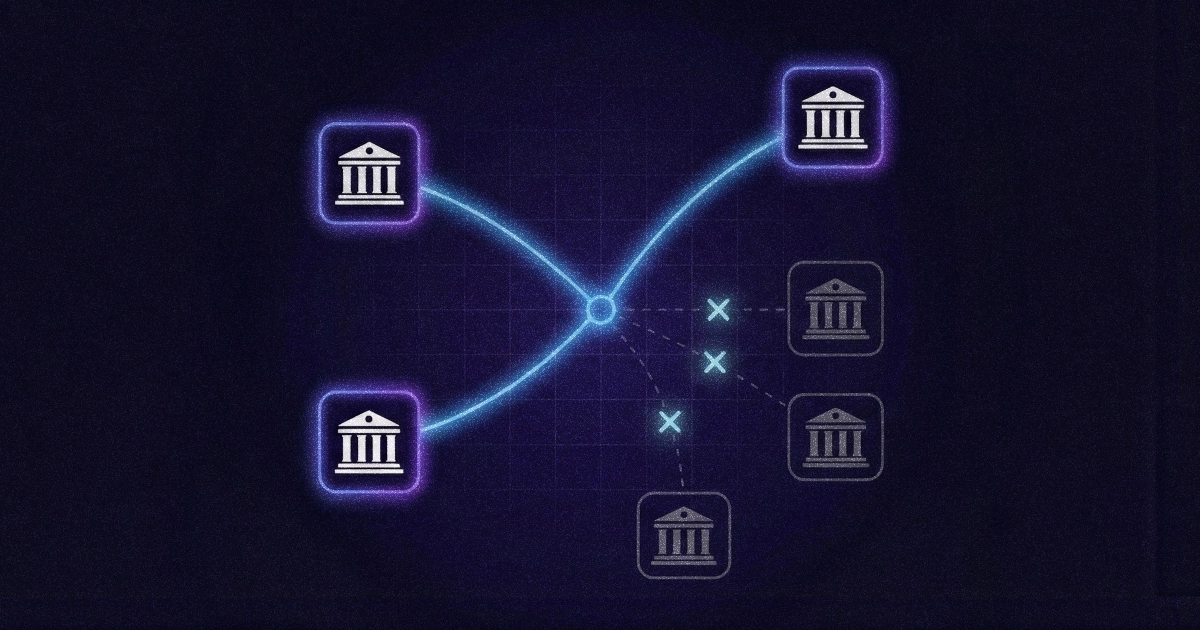
- retry failed connections elsewhere
- avoid being locked into one provider
- and evolve infrastructure without rebuilding their entire onboarding flow from scratch
The earlier you think about flexibility for redundancy, routing logic, and orchestration, the easier your future decisions become.
“How painful is migration later?”
Every founder has heard horror stories about migration projects.
Users getting forced through re-authentication.
Engineering teams disappearing into six-month rewrites.
Support tickets exploding overnight.
Nobody wants that.
The best migrations usually don’t happen all at once. Instead, strong teams approach migration incrementally:
- keep existing infrastructure running
- introduce fallback providers gradually
- mirror production traffic
- transition webhooks over time
- phase routing logic in carefully
For example, existing Plaid connections can be imported into Quiltt while continuing to operate during the transition process.
That means teams can start building flexibility into their stack without forcing customers through a disruptive cutover event on day one.
The important thing isn’t “switching providers,” it’s preserving momentum while reducing future risk.
“Do I need multiple aggregators this early?”
Probably not immediately.
One mistake early-stage founders make is overengineering infrastructure before they’ve validated distribution, retention, or customer demand.
You do not need a NASA-grade orchestration layer for 50 beta users.
But you do want to avoid creating unnecessary lock-in that becomes painful later.
The sweet spot is usually:
- move fast now
- preserve flexibility later
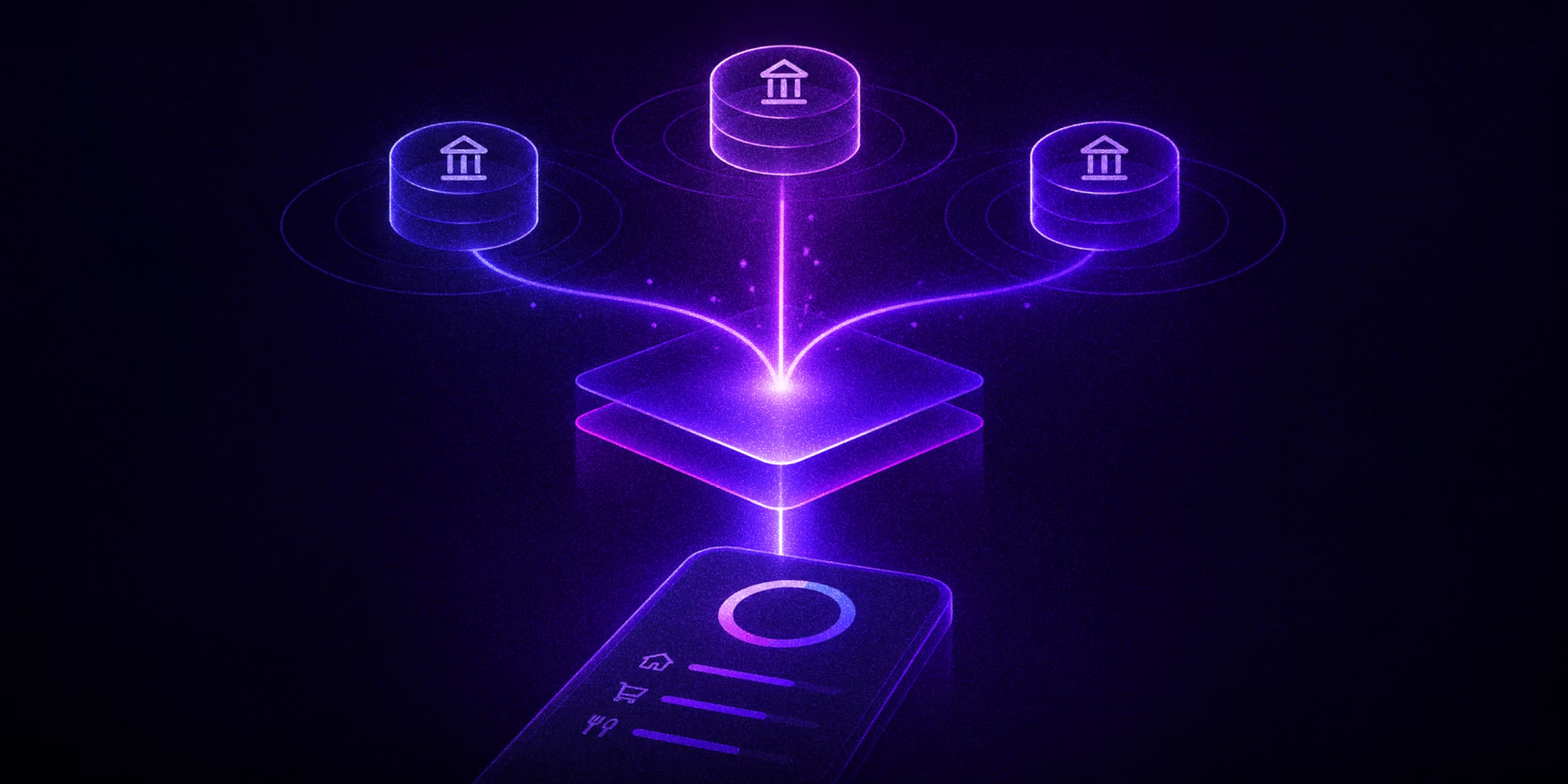
That’s where orchestration becomes interesting. It gives your team room to evolve the product. Your infrastructure can grow without forcing a rebuild every time requirements change.
“What does coverage actually look like across providers?”
This question matters a lot, but the danger is expecting a simple list of banks.
Because a “supported institution” from a list doesn’t always include:
- stable connectivity
- high conversion
- reliable MFA handling
- consistent transaction quality
- support for a specific data product
- or a smooth end-user experience
Different aggregators perform better in different scenarios.
Some have stronger coverage in certain regions.
Some handle specific institutions better.
Some perform better for lending workflows versus personal financial management.
Your users just want the connection to work. When account linking fails, users rarely blame the infrastructure provider.
They blame your app.
That’s why many fintech teams eventually start thinking less about “which aggregator is best” and more about “How do we maximize successful connections for our users?”
That’s a different mindset entirely.
“When should I actually think about orchestration?”
Usually earlier than teams expect.
Not because you need enterprise-grade infrastructure on day one, but because infrastructure decisions compound over time. The longer a product grows around rigid assumptions, the harder those assumptions become to unwind later.
The best fintech builders tend to think in phases.
Phase 1:
Ship fast. Validate the product. Find distribution.
Phase 2:
Improve reliability. Reduce operational headaches. Increase conversion.
Phase 3:
Build resilience. Add routing flexibility. Reduce vendor concentration risk.
The goal is building a stack that can evolve alongside the company. Infrastructure decisions that feel small at 10 customers can become existential at 100,000.
Final Thoughts
Every fintech founder wants the same thing when they set out:
- Get to market fast.
- Delight users.
- Stay alive long enough to matter.
That should absolutely be the priority.
But the strongest teams also understand something important:
Today's shortcut has a way of becoming tomorrow’s bottleneck.
The challenge is choosing infrastructure that gives your company room to survive, adapt, and grow as the stakes get bigger.
Frequently Asked Questions
What questions should I ask a bank data aggregator before signing?
The questions worth asking before you sign fall into three areas. On redundancy: what happens to your users if the aggregator goes down, and does the provider handle failover routing or does that become your problem? On pricing: what does the cost model look like at 1,000, 10,000, and 100,000 users, and are there volume tiers or commitments that change the math at scale? On portability: who owns the connection data, what does a migration look like if you need to switch providers, and how long does that typically take? If your product touches business or commercial accounts, ask specifically which institutions are covered and whether those connections are API-based or screen scraping. And keep in mind: just because a bank is covered on a provider's platform doesn't mean every type of account or data is covered. If you want to dive deeper, check out our blog on questions we typically hear from new fintech builders.
Why are early-stage fintech founders asking about multi-aggregator strategy before they launch?
Because the market has already done the expensive learning for them. A year ago, questions about multi-provider failover came from teams who had already lived through an outage or a pricing change that broke their unit economics. That lesson now circulates through founder communities (Slack, Reddit, etc.) fast enough that pre-launch teams are building in redundancy before they have a single user to protect. The fintech builder community talks, and hard lessons propagate faster than any individual company's experience curve would predict.
What should I consider when evaluating aggregators for my product?
Key factors include breadth of institutional coverage, data accuracy, refresh frequency, developer experience, support SLAs, compliance posture, and pricing flexibility. Testing in a sandbox and reviewing real-world sync reliability is also critical before committing.