Industry
Why Your Institution Picker Is Harder Than You Think
At Quiltt, we often meet customers looking to get full control of the institution selection experience when using account aggregators. The allure of building a custom solution is undeniable. For businesses venturing into financial data aggregation, the idea of creating a proprietary connector might seem like a path to greater control and flexibility. However, the reality is often far more complex than initially anticipated. A common starting point we've observed is the request for an institution list, which often presents an opportunity to shed light on the complexities involved in financial data aggregation – and of Quiltt's role within it.
The Institution List Misconception
At first glance, the institution list seems like a logical foundation for building a connector. After all, it's a comprehensive inventory of the financial institutions your users might want to connect with. However, this list is just a small piece of the puzzle. Obtaining and maintaining an accurate, up-to-date list from multiple data providers is a Herculean task in itself.
Each provider has its own format, naming conventions, and update frequency there are also duplicates and multiple options within an institution. Some providers offer APIs for retrieving institution lists, while others require manual extraction and synchronization. Moreover, institutions frequently merge, change names, or alter their online banking interfaces, necessitating constant vigilance to keep your list accurate.
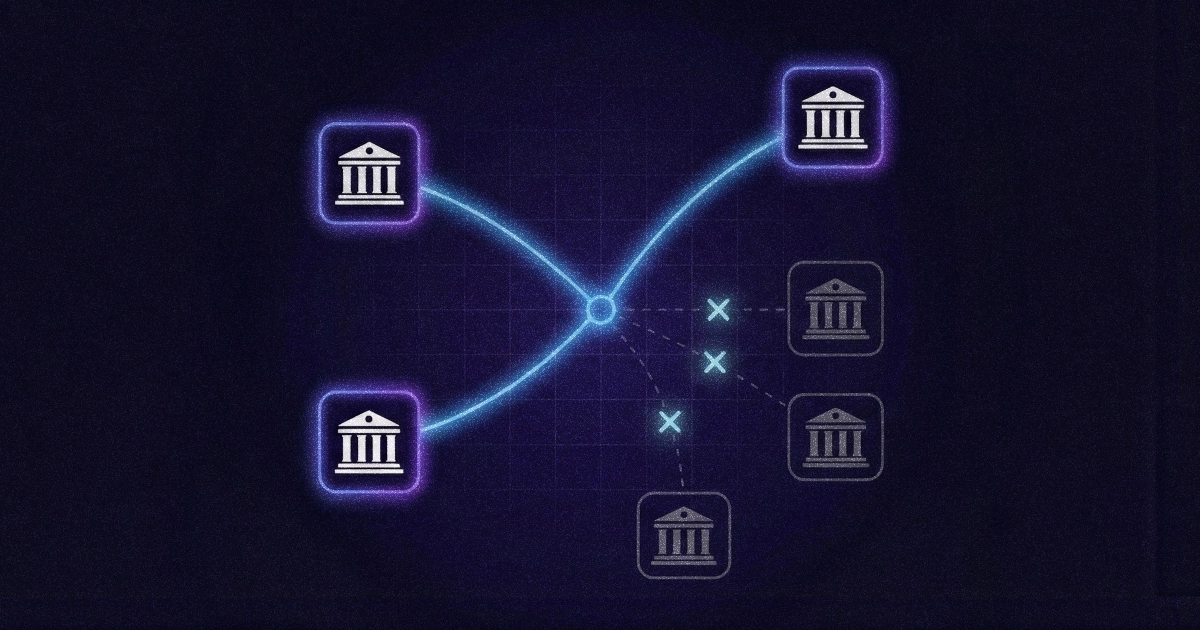
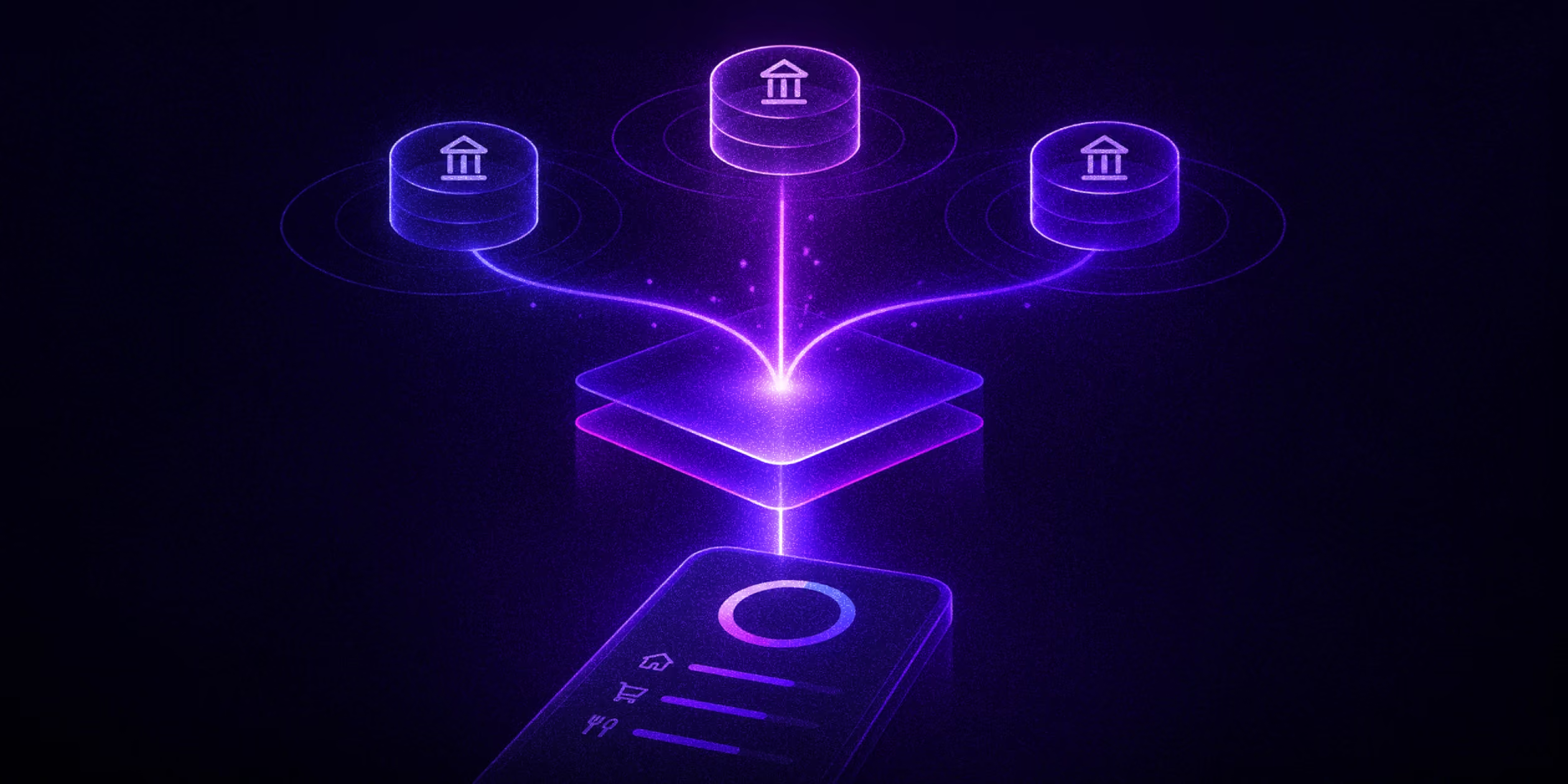
It's important to understand that Quiltt's role is to simplify these complexities, not add to them. We are a smart routing layer, designed to handle the intricacies of connecting to multiple aggregators and ensuring a seamless experience for your users.
The Iceberg Beneath the Surface
The challenges extend far beyond the institution list. Building a robust connector involves grappling with:
- Data Provider Quirks: Each provider has its own API quirks, authentication flows, and error handling mechanisms. You'll need to invest significant time and resources in understanding and adapting to these nuances.
- Data Normalization: Financial data is notoriously inconsistent across institutions and providers. You'll need to develop sophisticated data normalization techniques to ensure your application receives clean, consistent data.
- Connection Reliability: Financial institutions often change their online banking systems, potentially breaking your connector. You'll need to implement robust error handling and recovery mechanisms to ensure reliable connections.
- Rate Limiting and Throttling: Data providers often impose rate limits on API requests. You'll need to design your connector to respect these limits while still providing a responsive user experience.
- Security and Compliance: Handling sensitive financial data requires adhering to strict security and compliance regulations. You'll need to implement robust security measures and ensure your connector meets industry standards.
The Quiltt Connector Advantage: Simplifying the Complex
Building a custom connector isn't just about technical challenges; it's also about opportunity cost. The time and resources you invest in building and maintaining a connector could be better spent on developing your core product or service.
Quiltt Connector offloads these burdens, allowing you to focus on what you do best. By leveraging our expertise and infrastructure, you can accelerate your time to market, reduce development costs, and ensure a seamless user experience. We handle the complexities of aggregating data from multiple providers, intelligently routing requests, and ensuring reliable connections, so you don't have to.
Don't Reinvent the Wheel
If your financial data aggregation journey begins with a request for an institution list, take a step back and reassess. The path of building a custom connector is fraught with complexities and hidden challenges. Quiltt Connector offers a proven, reliable solution that allows you to sidestep these obstacles and focus on delivering value to your customers.
Frequently Asked Questions
Should we build institution-level routing in-house?
You can, but it is an ongoing commitment, not a one-time project. You would need to integrate and maintain several aggregators, normalize their different data models, monitor connection quality bank by bank, and adjust routes whenever an institution changes its login flow or access rules. Quiltt takes on that work, routing connections across multiple aggregators through one normalized API. Learn how account aggregation works at Quiltt.
Why does adding a second bank aggregator require rebuilding existing code rather than extending it?
An application built around a single aggregator encodes that provider's data model throughout the codebase: in the schema, the connection flow, and the error handling. Adding a second provider introduces a second data model that has to be reconciled at every point the first one was assumed. A normalization layer has to sit above both so the rest of the application sees one consistent shape. Without it, every downstream component (the frontend, the models, the webhooks) has to be updated to handle provider-specific variations. What looked like a deferred decision becomes technical debt distributed across the codebase, surfacing at exactly the moment the team is under pressure to fix a coverage gap.
Why do regional banks and credit unions create coverage problems for single-aggregator personal finance apps?
Major aggregators tend to prioritize large national banks, where user volume justifies the integration and maintenance cost. Regional banks and credit unions are less consistently supported; they may connect on one provider but not another, or they may connect unreliably even when listed as supported. Personal finance apps don't get to choose which institutions their users bank at, so coverage gaps directly cap the addressable user base. A user whose credit union isn't supported doesn't see a degraded experience. They see a dead end at the moment they try to link their account.