
Industry
Teller Is Shutting Down: How to Migrate Safely
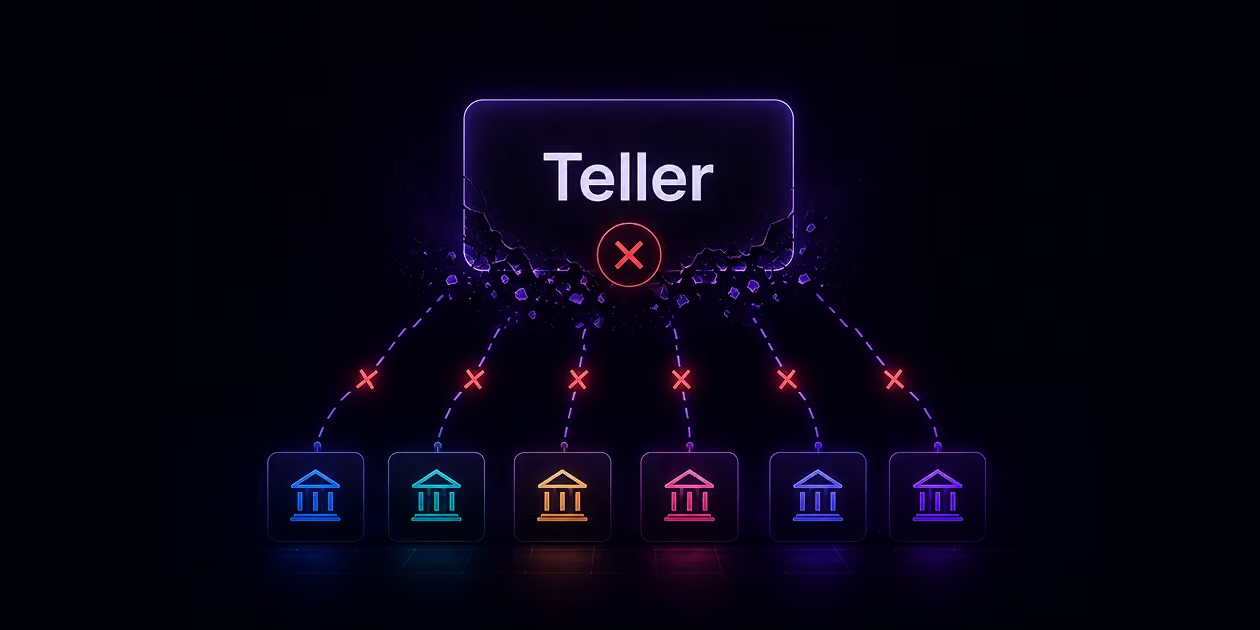
Teller is withdrawing its API product this week. If you build on it, you need a new connection layer fast, and you need one that won't put you right back here again. Here's what to do.
What transfers and what doesn't
Access tokens are bound to the provider that issued them. A token is a credential scoped to one aggregator's connection to one bank, so nothing you hold from Teller carries to a new provider. Every migration path requires your users to re-link their accounts through a new connection.
You don't have to force a mass re-link
Re-linking is unavoidable. A single forced re-auth event on cutover day is not.
Many teams read "users must re-link" and picture emailing their whole user base to reconnect inside a deadline window. That produces a support spike and drops the users who ignore the email. You can run it differently. Prompt each user to reconnect at their next natural touchpoint instead of all at once.
Sequence re-connects against activity you already see:
- When a user next logs in, show a reconnect prompt before the screen that needs live account data.
- When a stale connection fails a refresh, that failure is the trigger to route the user into the new link flow.
Active users move first because they show up first. Dormant accounts reconnect when they return, rather than counting as churn on a date you picked. Your busiest users stay current, and you spread the re-auth load across weeks instead of one fragile morning.
The caveat: any feature that needs a live connection for a user breaks until that user re-links. Balance checks, transaction refreshes, and payment verification all go down for a given account until its owner reconnects. Plan a fallback, whether a cached last-known value or a clear in-app message.
Migrate up a layer, not sideways
You're already paying the migration cost this week. That makes now the cheapest moment you'll ever have to fix the underlying dependency.
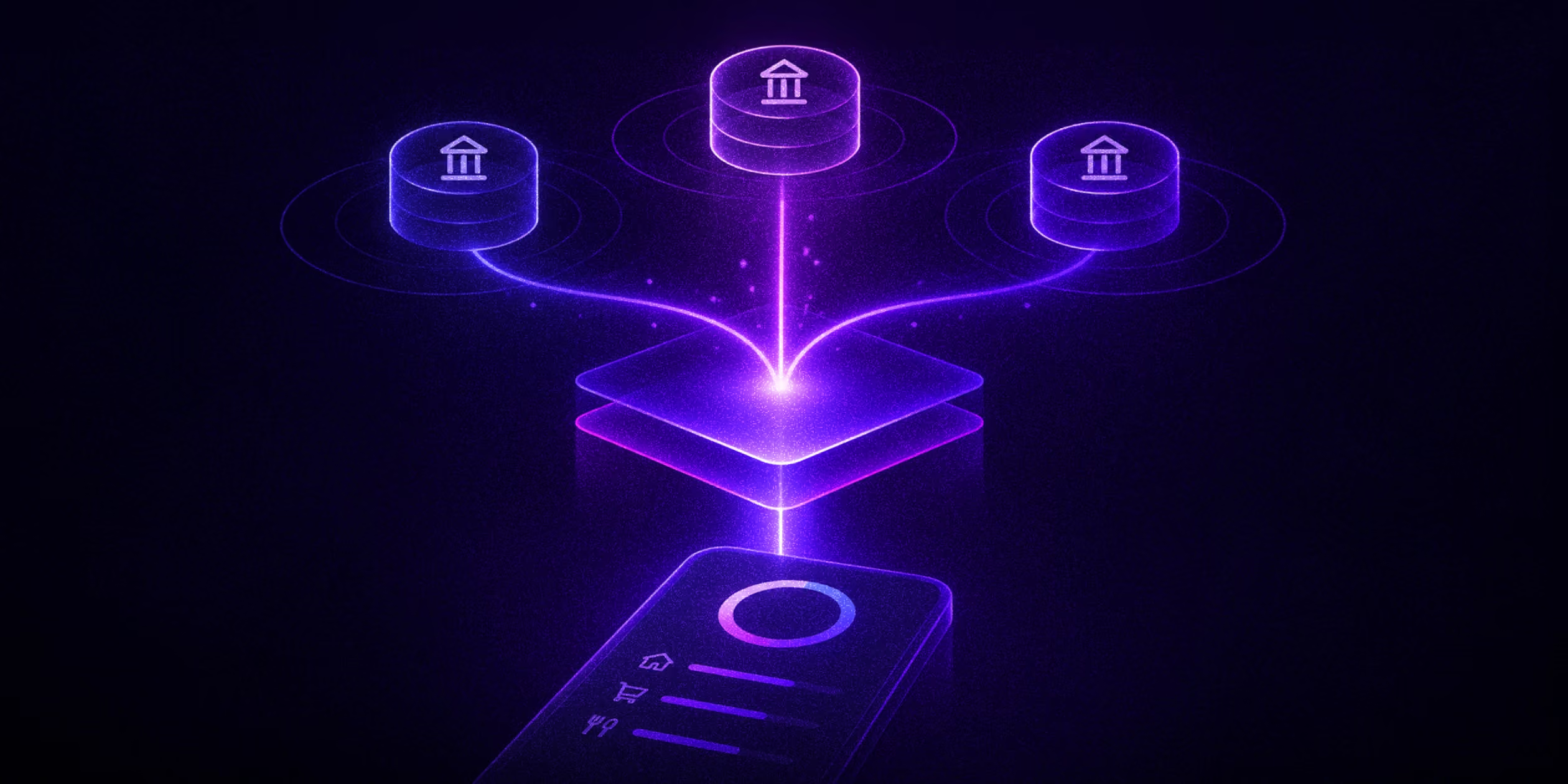
Re-linking users and rewiring your connection layer is the expensive part, and you do it either way. Do that rewire once to route through multiple aggregators, and no single provider's exit takes you down again. Swapping one pipe for another just resets the clock on the same risk.
Crew proved this under a real deadline. Weeks before their beta launch, their existing provider couldn't reach several banks their early users needed. Crew integrated Quiltt in under two weeks, connected to thousands of additional institutions, and launched on time. Routing across multiple aggregators through one API means a single provider going away is no longer your problem to solve from scratch.
What to do this week
Talk to us. You can start small, without a big commitment. Our Builder plan runs $100/mo with no extended contract and no setup fees. Pick your connection layer, then re-link users at their next natural touchpoint.
Frequently Asked Questions
What advantages does Quiltt offer over direct provider integration?
Quiltt significantly reduces the complexity and resource investment required to leverage open banking data:
- Single Integration: Instead of building and maintaining multiple provider integrations, you integrate once with Quiltt.
- Unified API: Access data from any provider through one consistent API, eliminating the need to handle provider-specific data formats.
- Provider Optimization: We automatically route users to the best provider for their specific bank, improving connection success rates.
- Cost Efficiency: Benefit from our aggregated buying power and avoid minimum monthly commitments with individual providers.
- Faster Time to Market: Launch in weeks instead of months with our pre-built components and comprehensive SDKs.
- Simplified Operations: One contract, one integration, one support team, and one bill - dramatically reducing the overhead of managing multiple vendor relationships.
Why is orchestration so important for B2B fintech apps?
An orchestration platform routes connection requests across multiple bank data aggregators through a single integration, allowing fintech apps to get broader bank coverage and automatic failover between providers. No single aggregator has anywhere close to full coverage of the commercial banking stack, making using multiple providers essential.
Why should I use Quiltt instead of integrating directly with data providers?
By integrating through Quiltt, you save a significant amount of time and effort compared to integrating with multiple providers individually. Quiltt handles the complexities of different APIs, data formats, and security requirements, providing you with a single, standardized interface. This allows you to focus on building your core product, while we take care of the open banking integrations.
What should I consider when evaluating aggregators for my product?
Key factors include breadth of institutional coverage, data accuracy, refresh frequency, developer experience, support SLAs, compliance posture, and pricing flexibility. Testing in a sandbox and reviewing real-world sync reliability is also critical before committing.