
Blog
Wealth Management Technology
Wealth Management Technology
Wealth management has always been about giving clients clarity, confidence, and control over their financial future. What has changed is the way those goals are achieved. The growth of digital tools, APIs, and advanced analytics has reshaped the wealth-management industry, giving firms new ways to connect with clients and optimize outcomes.
Modern investors expect more than quarterly reports and phone calls with advisors. They want real-time data, seamless access to their investment accounts, and insights tailored to their goals. For financial institutions and portfolio managers, the shift toward digital wealth platforms is no longer optional. Without adopting advanced wealth management software and wealth management API integrations, firms risk falling behind competitors that deliver speed, accuracy, and personalized service.
What Is Wealth Management Technology?
Wealth management technology, often referred to as wealthtech, covers the tools and platforms that support financial planning, asset management, and client engagement. These systems enable advisors to manage client portfolios, track the market value of assets, automate reporting, and deliver personalized advice at scale.
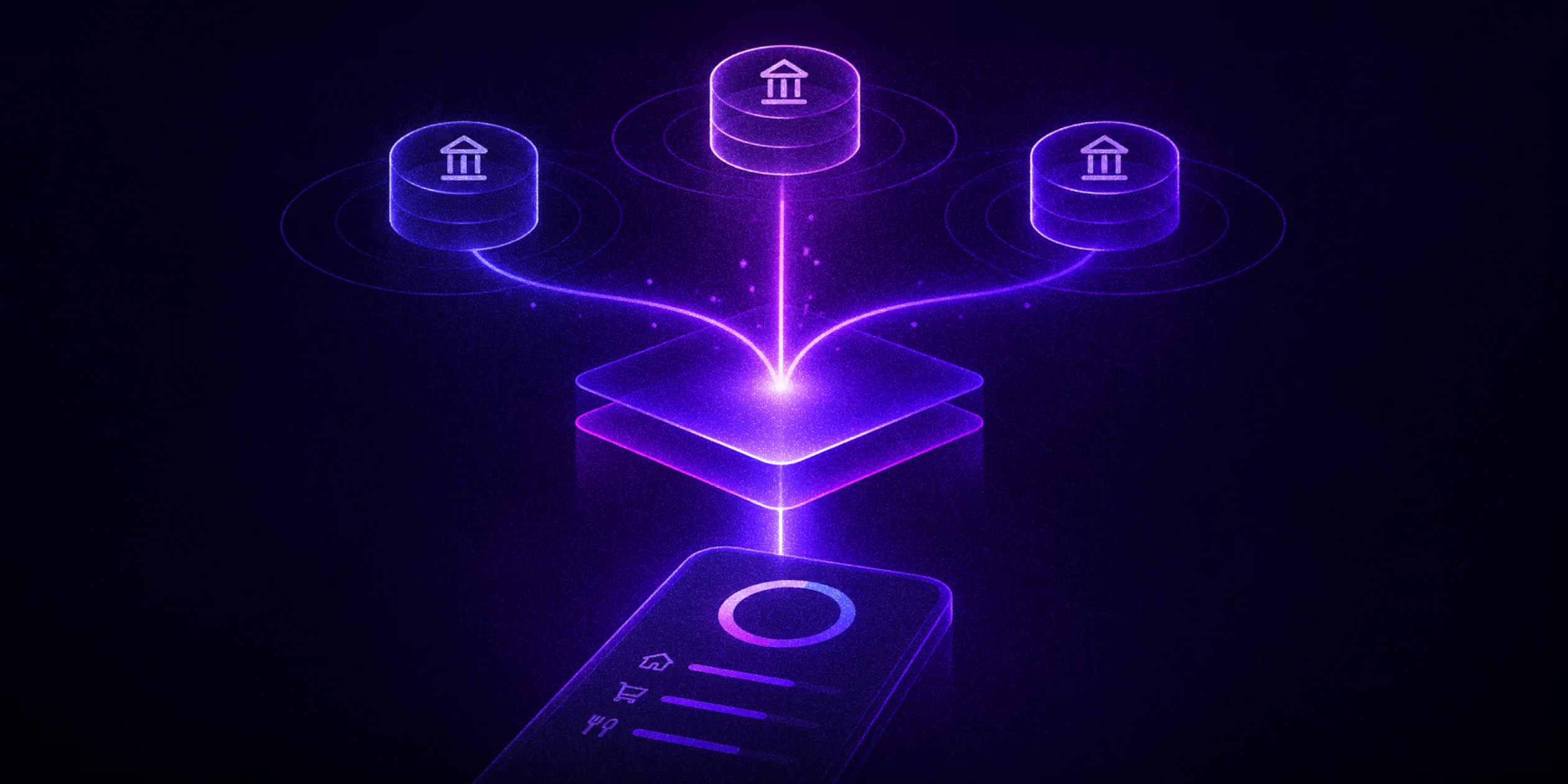
At the center of this shift are wealth management software solutions and wealth management APIs. Software platforms handle tasks like portfolio management, rebalancing tools, and performance tracking. Fintech APIs enable connections between systems, pulling in investment account data, loan data, and transaction details from different sources. This creates a unified view of a client’s wealth assets, improving the quality of advice.
In practice, wealth management technology helps advisors reduce administrative tasks, improve compliance accuracy, and create better customer experiences. For clients, it means more control, transparency, and timely insights into their financial lives.
Why Technology Matters in Modern Wealth Management
The wealth management industry faces pressure from multiple angles. Clients demand more transparency, regulators require stricter reporting, and competitors use technology to cut fees and deliver faster results. Firms that rely on legacy systems struggle to keep up with the pace.
Technology provides a solution. By adopting digital wealth management tools, firms can lower operational costs, automate compliance, and deliver the kind of real-time services clients expect. For example, a client who logs into a trading platform should see updated investment data instantly, rather than waiting for overnight batch processing.
Another reason technology matters is the complexity of today’s financial ecosystem. Clients often hold assets across multiple asset classes, accounts, and providers. Without strong data aggregation and wealth management data API solutions, advisors cannot see the full picture. With the right technology, they can analyze entire investment profiles in seconds, making advice both more accurate and more valuable.
How APIs Are Transforming Integrations, Automations, and Innovation
Application programming interfaces (APIs) sit at the heart of modern wealthtech. A wealth management API allows different platforms to share information securely and consistently. For example, APIs can pull investment account data from custodians, link to financial products, or integrate with identity verification services to ensure compliance.
The benefits extend to automation. APIs streamline tasks such as syncing customer data, processing transaction details, and generating compliance reports. For fintech builders, APIs reduce development time and create flexibility. Instead of building entire infrastructures from scratch, firms can connect to data providers and enrich services quickly.
Innovation also thrives in an API-first infrastructure. With a standard approach to data, startups can create new products that plug directly into the broader financial ecosystem. Robo-advisors, for example, rely on APIs to connect client portfolios with rebalancing tools, risk scoring engines, and performance alerts.
Key Features of Next-Gen Wealthtech Platforms
Real-time Portfolio Monitoring
Clients expect to see the current market value of their holdings whenever they log in. Real-time monitoring, powered by APIs, delivers accurate investment data across all accounts. This improves decision-making and builds trust in the platform.
Automated Compliance and Reporting
Compliance is resource-heavy, especially with global regulators tightening rules. Next-gen platforms automate client reporting, generate alerts for suspicious activities, and prepare data for audits. This reduces costs for compliance teams and improves accuracy.
Data Aggregation & Enrichment
Modern platforms pull in wealth data from multiple custodians and cloud providers. They clean, normalize, and enrich that data, providing advisors with reliable account holder data and a full view of client wealth.
AI-driven Investment Insights
Artificial intelligence brings predictive power to wealth management. By analyzing customer data, transaction patterns, and business activities, AI offers proactive recommendations. These insights help advisors rebalance portfolios, reduce risks, and highlight new opportunities.
Client Onboarding & KYC Automation
Onboarding often slows growth. Digital platforms streamline the onboarding process by automating identity verification, KYC checks, and customer acceptance policies. Faster onboarding improves customer experience while ensuring compliance.
The Rise of Robo-Advisors: Friend or Foe to Human Advisors?
Robo-advisors have disrupted traditional wealth management. By using algorithms, they deliver low-cost investment management with automated portfolio management and rebalancing. For some clients, the appeal lies in lower fees and simplicity.
Human advisors, however, remain critical. They bring judgment, empathy, and the ability to handle complex financial planning needs. For clients with intricate investment profiles or cross-generational wealth strategies, human expertise cannot be replaced by algorithms.
The future likely involves hybrid models. Robo-advisors handle routine portfolio tasks through digital wealth management tools, while human advisors focus on deeper financial planning and personalized guidance. Together, they create more scalable and effective service models.
How Top Firms Keep Data Safe While Staying Regulator-Ready
Security is one of the most pressing concerns in wealthtech. With vast amounts of customer data and account holder data moving across platforms, breaches can have devastating consequences.
Top firms address this challenge by collaborating with certified cloud providers, encrypting transaction details, and adhering to strict API standards. They implement real-time monitoring to detect anomalies, ensuring data integrity.
At the same time, compliance cannot be ignored. Regulators expect firms to prove that customer accounts are safe and that reporting is accurate. Automated monitoring, risk management, and regulatory checks help firms maintain readiness. When they invest in both cybersecurity and compliance controls, they build digital trust with clients.
Open Banking & API-First Infrastructure: What It Means for Wealth Managers
Open banking has created new opportunities for wealth managers. By allowing clients to share financial data securely with trusted third parties, open banking supports seamless aggregation of investment accounts, loan data, and transaction details.
An API-first infrastructure ensures that this data flows consistently between systems. For wealth managers, it means faster integrations, better insights, and greater flexibility in launching new financial products.
Open banking also improves customer experiences. Clients no longer need to manually upload statements or connect accounts individually. With secure wealth management data APIs, advisors get complete financial pictures, and clients enjoy smoother interactions.
Benefits of Wealthtech for Clients
More Transparency
Clients gain access to detailed client reporting, clear fee structures, and real-time updates on wealth assets. Transparency builds confidence and deepens loyalty.
Lower Fees
Digital platforms reduce overhead costs for firms. This allows them to pass savings on to clients through lower advisory fees and more cost-effective financial products.
Personalized Advice at Scale
AI and digital wealth management tools tailor recommendations to each investment profile. Clients with different goals and asset classes receive personalized advice that previously required high-touch service.
Faster Access to Services
From account opening to performance alerts, technology accelerates every interaction. Clients receive faster service, better insights, and a smoother customer experience.
How Wealth Firms Are Implementing New Technologies
Adoption strategies vary, but many firms start by upgrading wealth management software to handle core needs like portfolio management and reporting. Others focus on building ecosystems with a wealth management API that connects data sources, custodians, and digital front ends.
Successful firms often pilot new digital wealth platforms with small groups of clients before scaling. This allows them to refine user interfaces, ensure data integrity, and adapt workflows. Over time, these pilots expand into full-scale transformations that reshape how advisors and clients engage.
Collaboration with fintech startups also plays a role. Large institutions partner with innovators to bring real-time data, robo-advisor services, or AI-driven insights into their financial ecosystem without developing them internally.
From Legacy Systems to Digital Trust: What’s Slowing Things Down?
Despite the benefits, many firms remain tied to outdated systems. Legacy platforms make it difficult to integrate with APIs, limit access to real-time data, and increase compliance costs. Migration is expensive and requires cultural change.
Some firms hesitate due to security concerns. Sharing account holder data with external data providers requires strong safeguards. Others struggle with regulatory uncertainty, especially when global firms must meet multiple regulatory requirements.
Yet firms that delay adoption risk losing clients. Investors increasingly choose providers with transparent reporting, lower fees, and seamless digital experiences. Firms that continue to rely on legacy systems may see their clients migrate to more modern platforms.
Why Firms That Invest in Technology Today Will Lead Tomorrow
The shift to digital wealth management tools is not a passing trend. Clients expect personalized advice, instant access, and reliable data. Regulators expect accuracy and audit trails. Competitors are already using APIs, automation, and AI to reduce costs and improve results.
Firms that invest now will set the standard for the future. They will enjoy stronger client loyalty, faster growth, and better margins. By utilizing wealth management software and developing strategies based on a wealth management API, they establish a foundation of digital trust.
The wealth management leaders of tomorrow will be those who see technology not as an add-on but as the backbone of their strategy.
FAQ
Are APIs Safe in Financial Services?
Yes. A wealth management API follows strict API standards and uses encryption to protect customer data and transaction details. Partnering with certified data providers further enhances safety.
Can Robo-Advisors Replace Human Advisors?
Robo-advisors excel at handling routine tasks like portfolio rebalancing. Human advisors provide judgment, empathy, and tailored financial planning. Together, they create the most effective model.
Is Wealthtech Only for Large Institutions, or Can Small Firms Use It Too?
Small firms benefit from wealthtech just as much as large ones. Many wealth management software solutions are scalable, enabling smaller advisors to utilize the same digital wealth platforms as larger players.
What Are the Costs of Adopting Wealthtech Solutions?
Costs vary depending on the provider and scope. While upfront investment can be high, savings on compliance costs, improved efficiency, and higher client satisfaction deliver strong long-term value.
Can Wealthtech Help with Tax Planning and Reporting?
Yes. Many platforms integrate with financial planning tools to handle tax reporting, generate alerts, and streamline compliance across investment accounts.
Do APIs Allow Integration with Legacy Banking Systems?
Yes, though it can be complex. Many wealth management APIs are designed to connect with legacy systems through middleware or cloud providers. This supports gradual modernization.
Can Wealthtech Platforms Personalize Advice for Individual Clients?
Absolutely. By analyzing customer data, investment profiles, and wealth assets, digital platforms deliver personalized advice at scale. AI ensures recommendations align with individual goals.
Frequently Asked Questions
Can Wealthtech Platforms Personalize Advice for Individual Clients?
Absolutely. By analyzing customer data, investment profiles, and wealth assets, digital platforms deliver personalized advice at scale. AI ensures recommendations align with individual goals.
Is Wealthtech Only for Large Institutions, or Can Small Firms Use It Too?
Small firms benefit from wealthtech just as much as large ones. Many wealth management software solutions are scalable, enabling smaller advisors to utilize the same digital wealth platforms as larger players.
Can Robo-Advisors Replace Human Advisors?
Robo-advisors excel at handling routine tasks like portfolio rebalancing. Human advisors provide judgment, empathy, and tailored financial planning. Together, they create the most effective model.